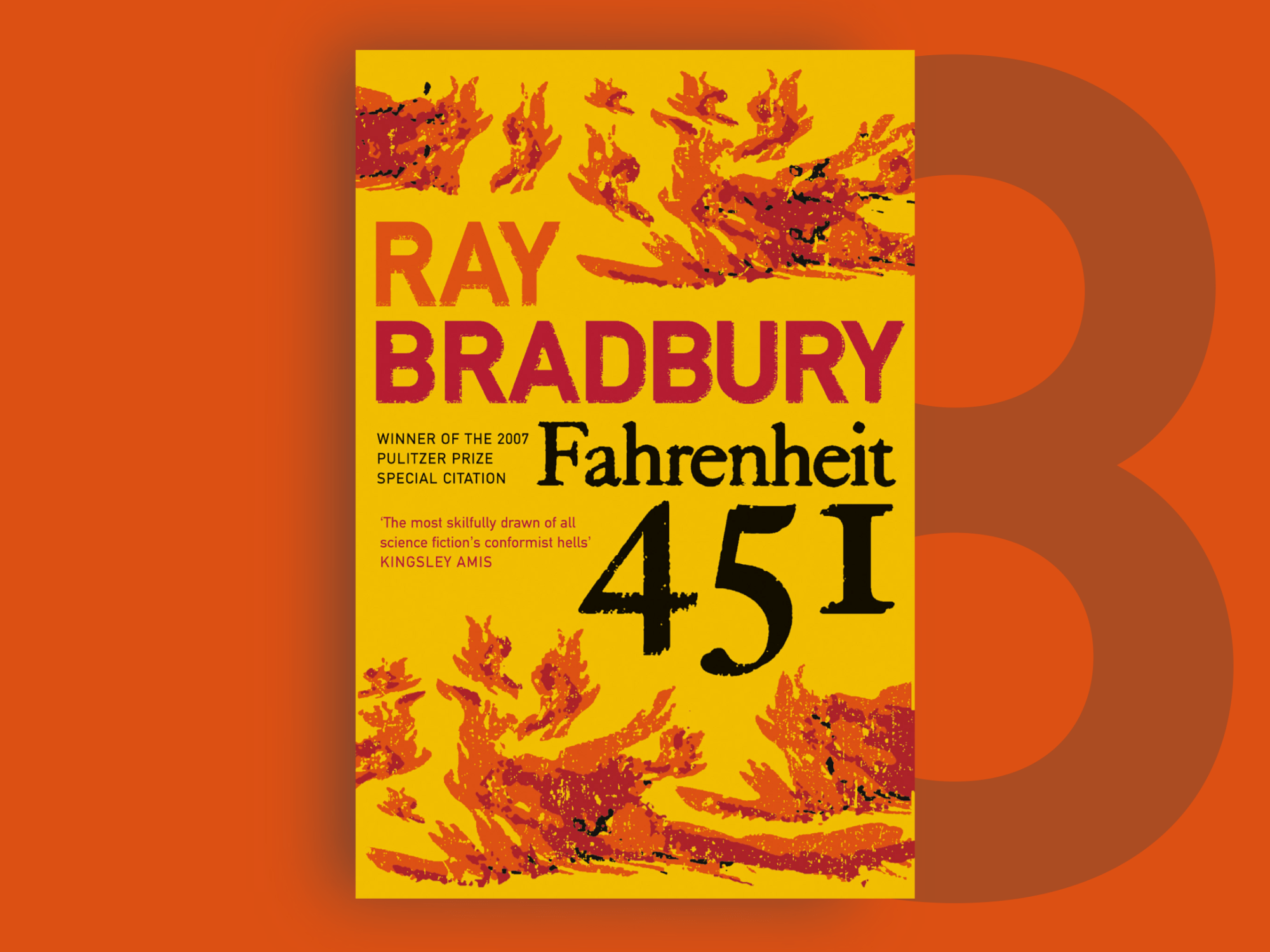
I first discovered Ray Bradbury in the early 1990s, when his show “The Ray Bradbury Theater” debuted on RTP, Portugal’s state television network. The first episode I ever watched was “The Crowd.” I stumbled upon it entirely by accident and had no idea what I was looking at. When it ended, I didn’t immediately realise it was over, so a week later, there I was, waiting to see how the story would unfold. Used to television shows with neatly tied-up endings, that was the moment I realised how Bradbury built his stories—leaving you to imagine so much of the rest.
Since then, I’ve read many of his short stories and a few of his books, from “The Martian Chronicles” to “Death Is a Lonely Business”, and I swear that if I read any of his work without knowing the author beforehand, I could easily guess it was Ray Bradbury. His voice is uniquely recognisable because he wrote science fiction not with technical jargon, but with the vivid, sensory brushstrokes of a romantic poet. (Now that I think about it, he seems like the polar opposite of Andy Weir, the author of “Project Hail Mary,” whom I reviewed in my previous post).
“Fahrenheit 451” is no different. It was first published in October 1953 by Ballantine Books. The novel actually evolved from a shorter novella he wrote called “The Fireman,” which was published earlier that same year in the February 1951 issue of Galaxy Science Fiction magazine. Bradbury famously expanded it into the full novel we know today by typing it out on a pay-by-the-hour typewriter in the basement of a library. This is true commitment to the craft!
Set in a bleak, dystopian future, the book introduces us to Guy Montag, a “fireman” whose job is not to extinguish fires, but to ignite them. In this society, books are strictly illegal—blamed for causing dissent, unhappiness, and original thought. Instead, the population is kept docile and distracted by wall-sized interactive televisions and constant, mindless noise. Montag takes quiet pride in his work until a chance encounter with Clarisse, an eccentric teenage neighbour who questions the world around her, shatters his complacency and sets him on a dangerous internal journey that forces him to choose between a comfortable, hollow existence and a perilous quest to discover what humanity lost when it chose to burn its printed past.
While the premise is fascinating—and perhaps even more relevant today, when shrinking attention spans leave people with little patience to actually read the books sitting on their shelves—the novel itself falls a bit short. Bradbury imagined a totalitarian state enforcing docility by forcing people to watch mind-numbing television. But modern control doesn’t come from a top-down state forcing us to watch broadcast TV; it comes from Big Tech algorithms designed to monetise our attention. It isn’t a state-mandated ban on information that pacifies us, but a relentless flood of information overload, outrage, and distraction that leaves us numb. Because of this relatively simple world-building, the narrative lacks some of the psychological and thematic depth found in other classic dystopias. Ultimately, given its single core metaphor, the story likely would have worked even better as one of his short stories rather than a full-length novel.
Still, even with those criticisms, “Fahrenheit 451” remains an undeniable classic. It stands as a testament to Bradbury’s incredible foresight and his rare gift for turning social anxiety into haunting, poetic art. While it may not reach the soaring heights of his best short fiction or match the sheer depth of other dystopian giants, its central warning hits closer to home with every passing year. It’s a vivid, passionate reminder of why stories matter—and for that alone, it easily earns an 8 out of 10.

