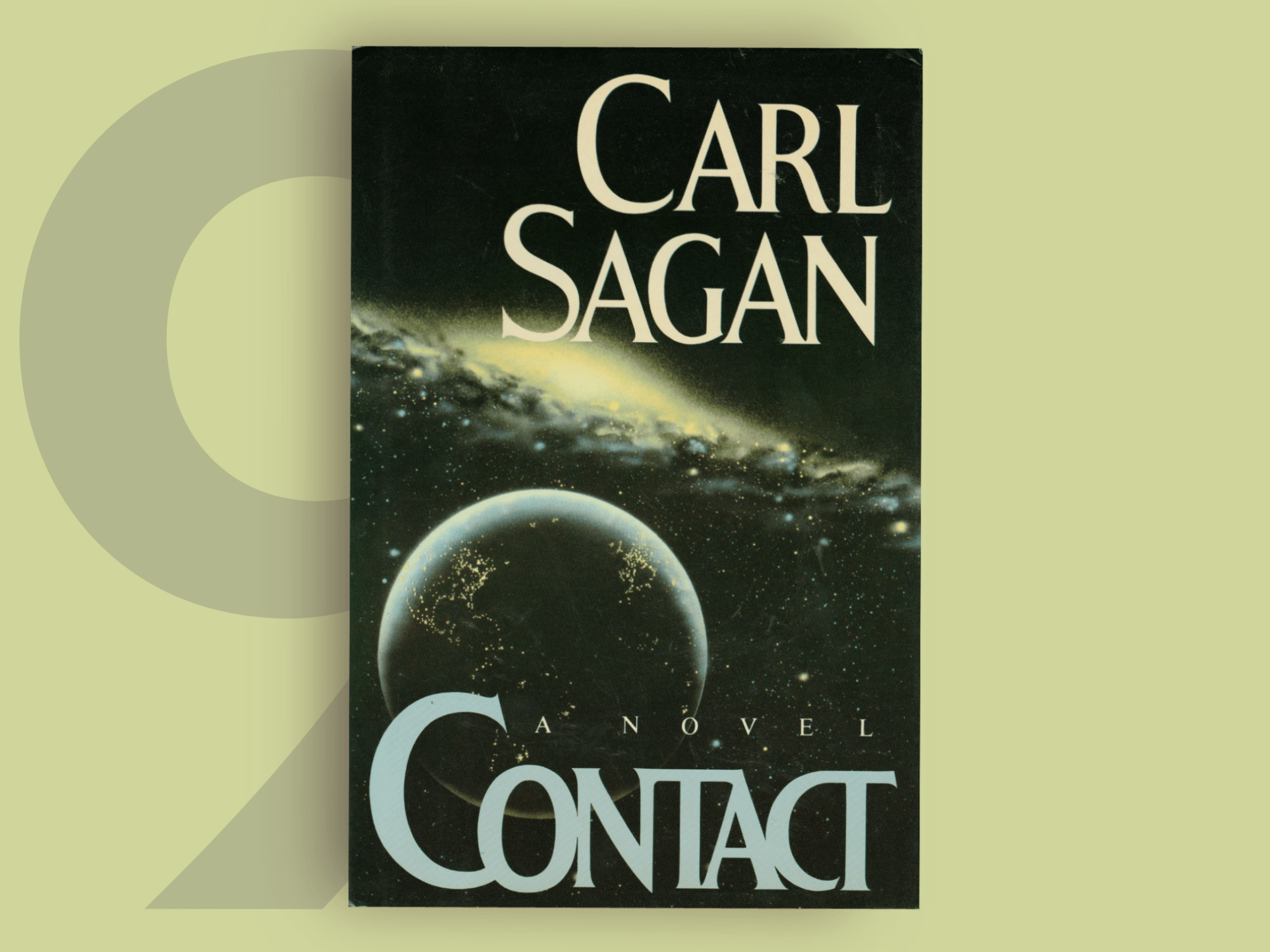
I first picked up “Contact” – Carl Sagan’s only work of fiction – sometime between its 1985 release and the 1997 film adaptation. Having revisited the story recently, I’m struck by how beautifully the novel and the movie complement each other. While I absolutely love the Jodie Foster film for its emotional heart, the book offers a wider, more global perspective on how humanity might react to a signal from the stars.
The story follows Dr. Ellie Arroway, a brilliant scientist who discovers a complex blueprint for a mysterious Machine hidden in a signal from the star Vega. What I find so fascinating about the novel is the scale of the response. While the film focuses on Ellie’s personal journey, Sagan’s book explores a world where a shared cosmic mystery forces rivals – including the U.S. and the Soviet Union – to set aside their tensions to build the Machine as a single species.
Reading it today, it feels like a hopeful counter-narrative to our own polarised world. Sagan presents a vision where the discovery of our place in the universe encourages us to look past our divisions. Both versions of the story handle the intersection of science and faith with incredible respect, though the book carries the journey even further, culminating in a mathematical “signature” that adds a final, breathtaking layer of wonder to the ending.
Whether you prefer the intimate, emotional resonance of the film or the expansive, philosophical depth of the book, both are equally successful at reminding us how small and significant we are at the same time. However, if you’ve only seen the movie, you’re missing half the universe. I’m giving the book a 9 out of 10.
– S –
 Imaginary Worlds Book Club