If you had to choose, what would you give up first: your sense of smell or your smartphone? It sounds like an easy answer, but a specific study by researchers Herz and Bajec revealed a startling truth about how little we value our noses. When asked to weigh their senses against modern luxuries, college students were willing to trade their sense of smell just to keep their phones, and nearly half of all women would sacrifice their ability to smell before they’d give up their hair. We treat smell as a disposable luxury – the “forgotten” sense that we’d toss away for the sake of a digital screen or a good hair day.
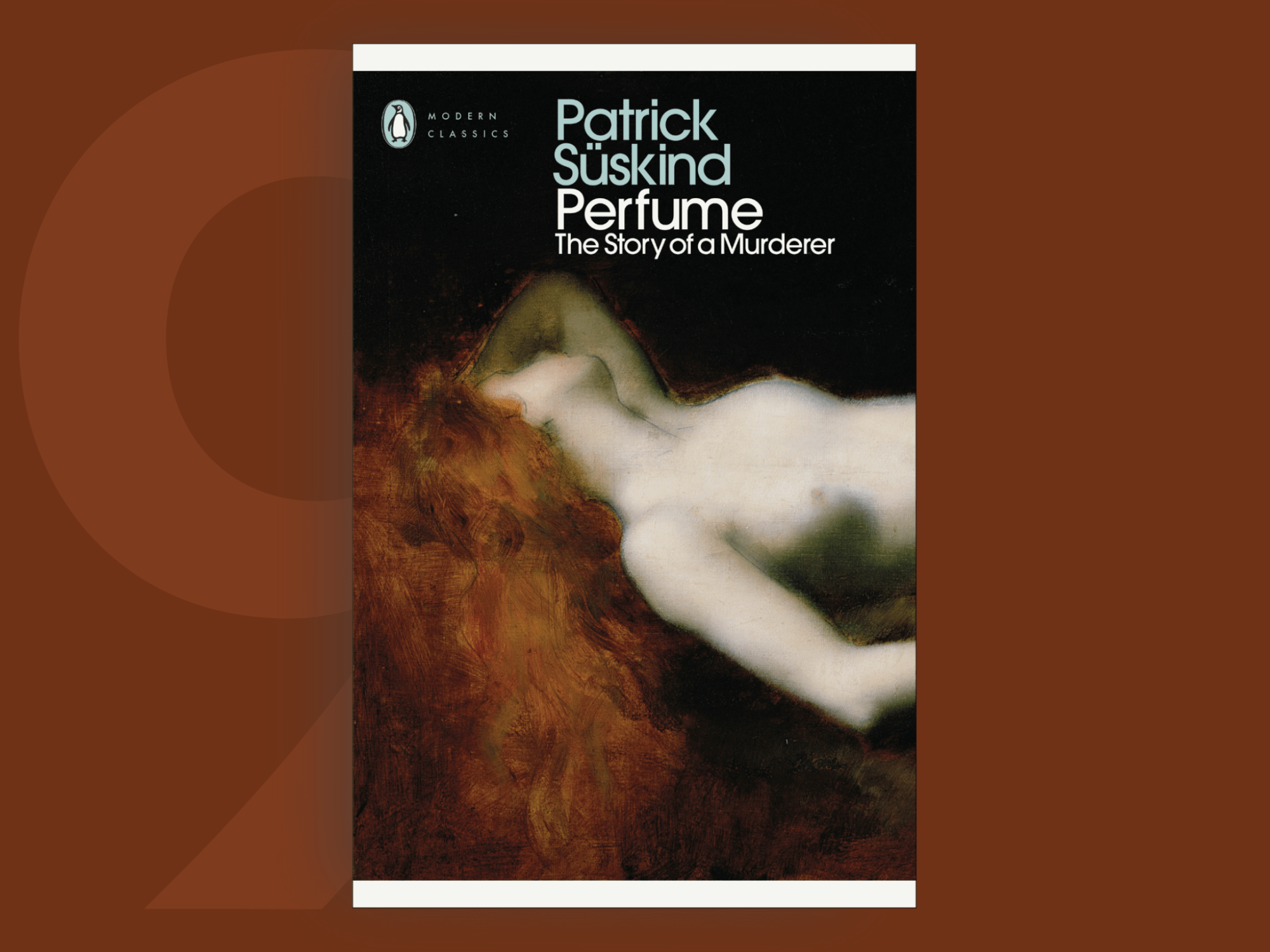
This indifference vanishes once you read Patrick Süskind’s “Perfume”, where this supposedly “least important” sense is transformed into a weapon of absolute power. The novel introduces us to Jean-Baptiste Grenouille, a man born into the stench of 18th-century Paris who possesses a gift that makes our modern apathy look like a tragedy: a superhuman sense of smell. Grenouille embarks on a dark journey to distill the essence of human beauty and create the world’s most powerful fragrance. This quest leads him to commit a series of cold-blooded murders to “harvest” the scents of his victims and achieve his ultimate olfactory masterpiece.
What struck me most in the novel was that 18th-century Paris isn’t just a background – it’s the perfect, repulsive foil to Grenouille’s quest. Süskind drags us through the literal rot of the Cimetière des Innocents, a place where filth wasn’t just a nuisance, but a moral judgment. Living under the “Miasma Theory,” people truly believed a foul stench was the mark of a decaying soul or a looming plague.
It’s this suffocating atmosphere that makes the book’s tension so effective. In a way, Grenouille’s hatred for humanity feels almost justified by the world he’s born into; his obsession with a “divine” fragrance feels like a desperate, violent escape from the grime. The genius of the book lies in that jarring contrast: the fact that the world’s most transcendent beauty had to be distilled from its most stomach-turning nightmare.
Although Süskind never confirmed it, many believe the character of Jean-Baptiste Grenouille was inspired by Manuel Blanco Romasanta, known as the “Tallow Man”. Romasanta was a 19th-century Spanish serial killer who murdered victims to extract their body fat, allegedly to create high-quality soap. These gruesome real-life crimes provide a chilling historical blueprint for the protagonist’s use of animal fats and enfleurage to “capture” the physical essence of his victims. This “monstrous” figure mirrors Grenouille’s transformation of human remains into a refined, commercial product through obsessive, scientific methods.
At the risk of being a bit cheeky in my conclusion, I would say that while Herz and Bajec highlight our modern tendency to undervalue the nose, Süskind’s forces us to acknowledge the raw, primal power that scent holds over our subconscious. It is a rare book that manages to be both beautiful and repulsive, scientific and magical, all at once. For its brilliant historical immersion and its ability to make the invisible world of odors feel terrifyingly tangible, I give it a 9 out of 10. It’s a sensory journey that will leave you sniffing the air a little more cautiously long after you’ve turned the final page.
– S –
 Imaginary Worlds Book Club