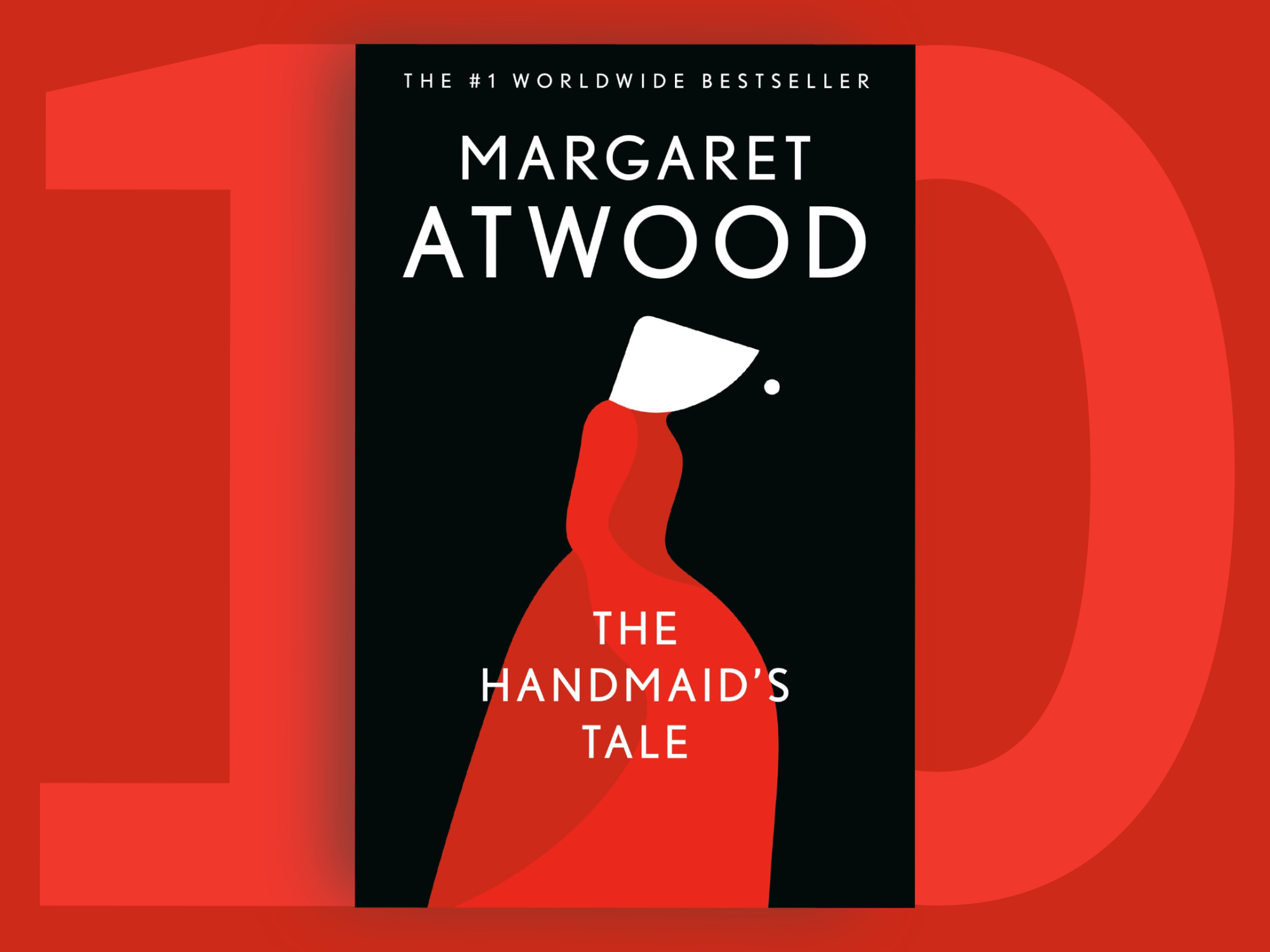
I read that Margaret Atwood’s interest in dystopian fiction started in her teens with Orwell’s “Nineteen Eighty-Four” and Huxley’s “Brave New World”. It makes you think – what would the genre even look like now if she hadn’t encountered those books, given Atwood is practically a synonym for contemporary dystopian fiction? Interestingly, she began writing “The Handmaid’s Tale” in 1984…
In “The Handmaid’s Tale”, the Canadian author imagines a future where a totalitarian theocracy, the Republic of Gilead, has taken over the United States and relegated women to the homemaking and childbearing roles. Atwood’s masterful writing draws the reader into the harrowing world of Offred, a Handmaid forced into sexual servitude. Even her name – “Of Fred” – serves as a chilling symbol of her lost identity. Through Offred’s eyes (the story is narrated in the first person, present tense), we experience her fear, her resilience, and her quiet acts of rebellion as the narrative shifts between her memories and her present struggle for survival, creating a pervasive sense of claustrophobia and dread.
“The Handmaid’s Tale” serves as a stark warning about the potential for societal backsliding and the dangers of absolute authority. As Atwood herself has noted, the novel contains no element that hasn’t existed somewhere in the world at some point, suggesting that these tendencies could re-emerge given the right circumstances of social instability.
While the themes are very disturbing, the book stands as a testament to the enduring human spirit. Offred’s voice, though constrained, remains a powerful embodiment of resistance and hope.
“The Handmaid’s Tale” is a must-read for anyone interested in dystopian literature, feminist fiction, or simply stories that make you think. It’s a book that will stay with you long after you turn the final page. A clear 10 out of 10!
– S –
 Imaginary Worlds Book Club