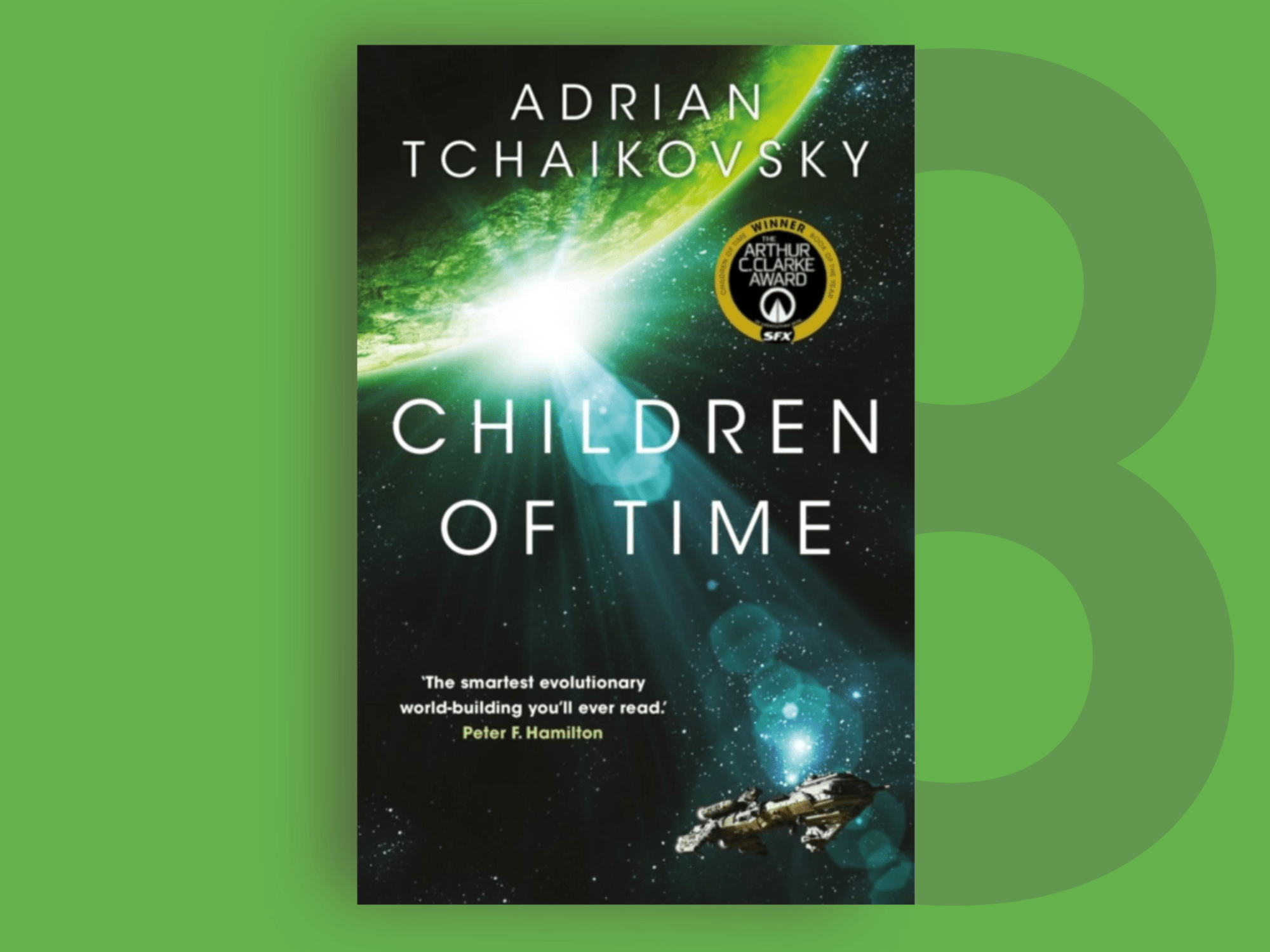
During the holiday break, I revisited Sid Meier’s “Civilization”. I’ve always been drawn to the game’s focus on world-building, even in my teens, finding the idea of developing a civilisation from a primitive state to a space-faring culture deeply compelling. It’s no surprise I was captivated by Adrian Tchaikovsky’s “Children of Time.” This remarkably original science fiction novel centers on the creation of a civilisation from scratch, detailing the evolution of culture, language, technology, and social structure, but with a unique twist I’ll leave for you to discover.
The premise of the book is simple: the last remnants of the human race abandoned a dying Earth in search of a new home. Using ancient start maps, they find a previously terraformed world, but a startling discovery awaits: a new society has taken root, claiming the planet as its own.
The narrative unfolds over millennia, exploring not only the mechanics of evolution, the perils of xenophobia, and the challenges of communication, but also the very heart of existence: the nature of consciousness and sentience.
The book’s dense plot and scientific concepts occasionally slowed my reading pace, and the ending doesn’t provide a clear-cut resolution to the central conflict. However, in fairness, this is also part what makes the book so rewarding.
“Children of Time” won the Arthur C. Clarke Award in 2016, one of the most prestigious science fiction awards. This is the first book in a trilogy (though it can be easily read on its own). The other books are “Children of Ruin” and “Children of Memory,” which continue to explore the universe Tchaikovsky created.
If you enjoy science fiction that delves into biology and evolution, explores philosophical and social themes, and features detailed and immersive world-building, then I highly recommend this book. Just be warned: it might require you to face a deep-seated fear… I give it an 8.
– S –
 Imaginary Worlds Book Club