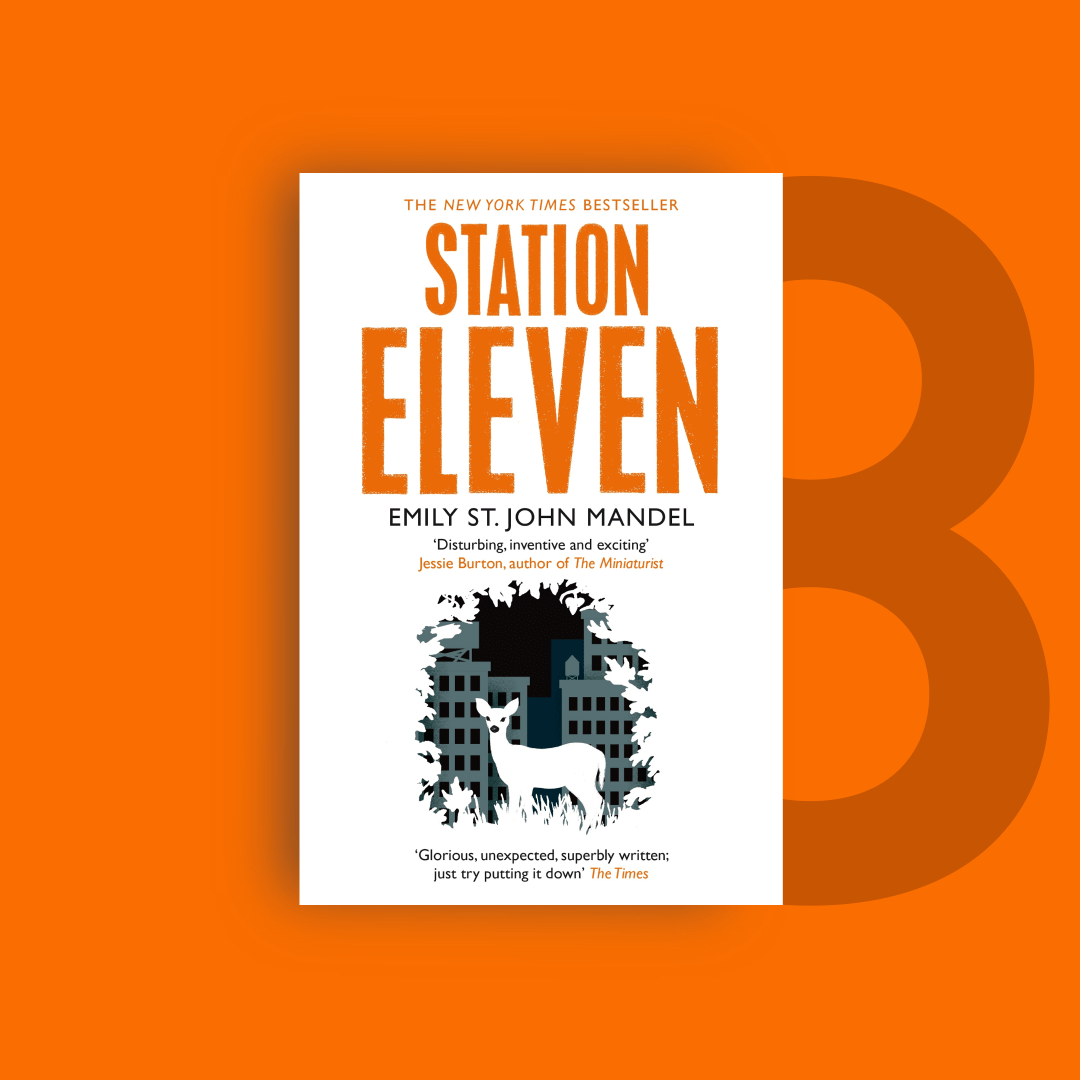
There are many reasons why people buy the books they do. Some are drawn to a particular author or genre, while others are interested in the subject matter or influenced by the book’s reviews. The cover design, the blurb, the fore-edge painting, and even recommendations from friends, family, and bookstagrammers (yes, it’s a word, though still informal) are other common influences. In the grand spectrum of book-buying motivations, my reason for purchasing Emily St. John Mandel’s book falls squarely into the “impulse purchase based on title alone” category. Bored at Brussels airport + “Station Eleven” = done deal.
In Station Eleven, the Canadian author crafts a moving and insightful narrative about the world transformed by the Georgia Flu. The novel alternates between two distinct periods: the pre-pandemic era, marked by the tragic death of famous Shakespearean actor Arthur Leander, and the post-apocalyptic landscape, where the Travelling Symphony attempts to rebuild and preserve the remnants of civilization.
Mandel’s writing is lyrical and evocative, painting vivid nostalgic pictures of the world. The characters are rich and relatable, each grappling with their loss and finding ways to cope. What I found particularly compelling about this book is that, beyond the surface of a post-apocalyptic narrative, “Station Eleven” is a powerful meditation on creativity, remembrance, and the enduring power of hope, encapsulated in the Travelling Symphony’s poignant motto, “survival is insufficient.”
I read the novel sometime in 2017, three years after its publication and, perhaps more significantly, three years before COVID-19 was declared a pandemic. I mention this because the pandemic has lent the book’s themes a new and unsettling relevance.
A powerful and unforgettable exploration of the human condition, Station Eleven is a must-read for fans of post-apocalyptic pandemic fiction.
I’m giving it an 8, just because I reserve 9 and 10 for masterpieces.
-S-
 Imaginary Worlds Book Club